Must be quite a sight to behold! You can witness this at Körös River (Hungary), Central Europe, if you are lucky. Because of these kinds of occurrences being largely dependent on environmental factors such as temperature or moisture, it was nearly impossible to tell exactly when they would happen.
If you don't keep your nest neat and tidy, no females will even visit you. On the plus side, though, if you're excellent in this department, you might get multiple visits in a night!
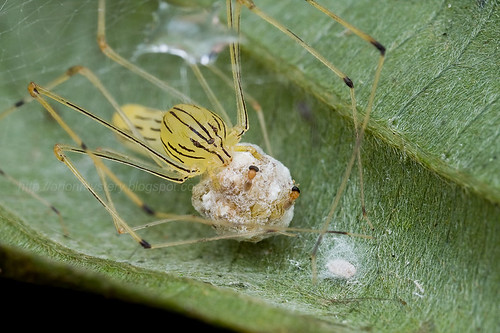
An orchard spider is shown enduring a parasitic wasp grub, which injects its host with a hormone that deranges it and halts the spinning of webs. The grub then sucks the liquid from the spider's body and uses the remaining silk to form its cocoon.
You can read about this amazing DVD and how it was made here on Wikipedia.
More parasitoidism:
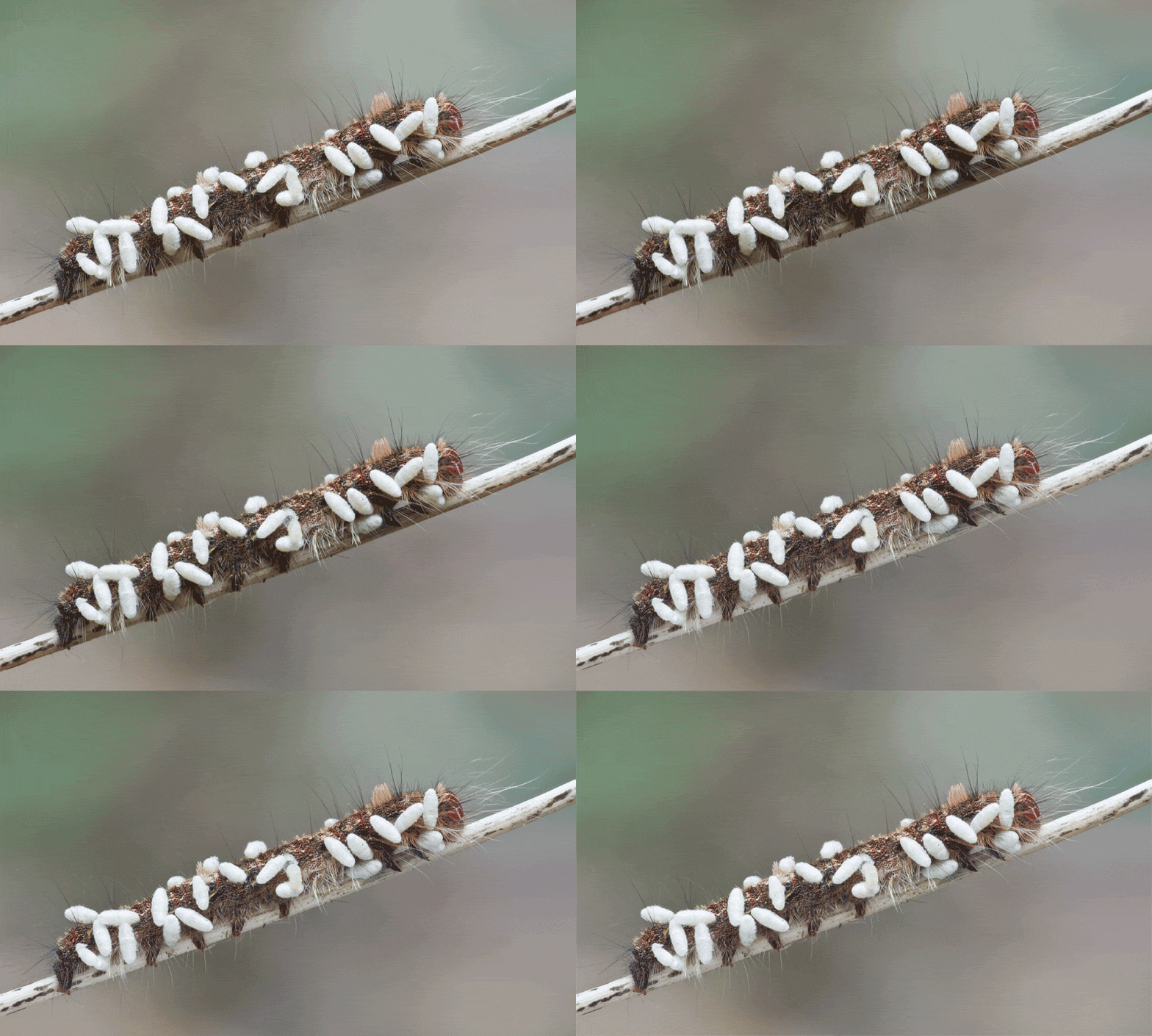
A heavily parasited caterpillar. You can see grub movement in the animation.
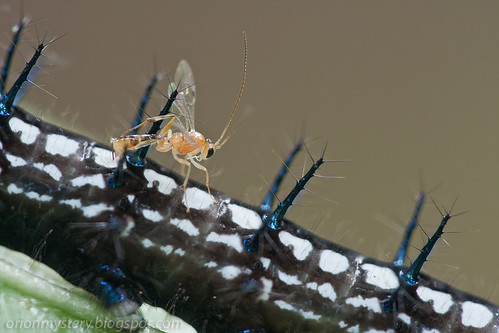
A parasitoid wasp ovipositing on a autumn leaf butterfly caterpillar
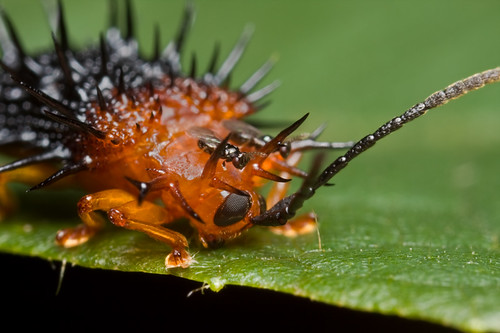
A parasitoid wasp waiting to parasitize the eggs of these tortoise beetles.
Two parasitoid wasps on the egg sac of a spitting spider.
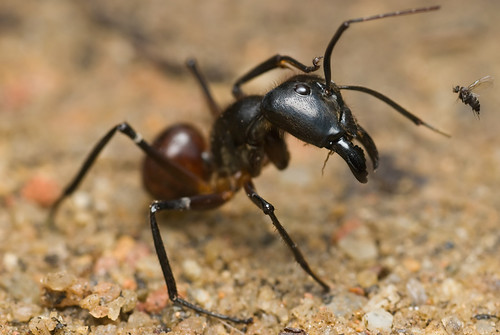
Giant tropical ant, Camponotus gigas under attack by parasitoid Phoridae flies.
"If we and the rest of the backboned animals were to disappear overnight, the rest of the world would get on pretty well. But if they were to disappear, the land's ecosystems would collapse. The soil would lose its fertility. Many of the plants would no longer be pollinated. Lots of animals, amphibians, reptiles, birds, mammals would have nothing to eat. And our fields and pastures would be covered with dung and carrion. These small creatures are within a few inches of our feet, wherever we go on land — but often, they're disregarded. We would do very well to remember them."
–Sir David Attenborough, in closing of the "Life In The Undergrowth" documentary.
I must have told you a hundred times how much I love the awesome Life in the Undergrowth insect documentary. It's probably the best insect documentary ever made!
While I enjoy every single minute of the 5 episodes x 50 minute series, it's the closing by Sir David Attenborough that really moves me deeply.
You have read the words, now see the short clip which i extracted, and hear it from Sir David Attenborough himself.
Go search for more clips of the series on youtube. Better still, get the DVD. The article on Wikipedia on "Life In The Undergrowth" is an excellent read too.
Macro is a bit like portraiture, except instead of working with a human models, you work with insects.
In portraiture, you want to get to know your models, help them relax, pose them and bring out the best in them. Same for insects. Okay, you can't really make insects pose if they don't want to, but knowing as much as you can about them help you in finding them, approaching them (without spooking them) and increasing one's appreciation for these amazing insects.
One way of getting to know your insect models is by watching this incredible DVD by BBC, narrated by the great Sir David Attenborough.
This is the first video/slide show i created using mainly some of my favorite digital macro images and also couple of nature and landscape images. The free tune is from www.audionautix.com



 and Canon MT24EX Twin Flash with DIY Concave Diffuser.